
About us
The Development Economics Research Group combines data-driven analysis
with real-world insights to better understand global development challenges.
Jump To:
Faculty of Business and Economics
Development Economics and Global Political Economy
Prof. Andreas Fuchs
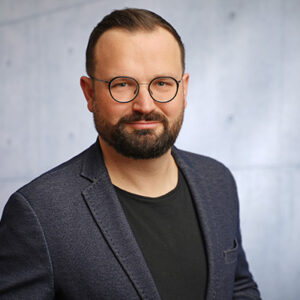
The Chair of Development Economics and Global Political Economy investigates policy-relevant issues in development economics and international political economy using predominantly quantitative methods.
We examine questions of international development, trade, and investment policies, with a particular focus on low- and middle-income countries. Central objects of investigation include the effectiveness of international development cooperation projects and government-led interventions and policies. We also analyze the political economy of natural disasters, conflicts, migration, and international organizations.
Behavioral and Development Economics
Prof. Marcela Ibanez

The Chair of Behavioral and Development Economics investigates the origin and development of cooperative norms and their effect on development outcomes, using the tools of experimental economics.
We examine how norms of altruism and solidarity change with the cognitive development of children and study how particular institutions as religiosity, insurances, and competitive payments affect prosocial social norms. We implement large field experiments to test how particular policies can decrease discrimination and promote gender inequality, law compliance, and pro-environmental behavior.
Our teaching focuses on development economics from a microeconomic and behavioral economic perspective.
International Economic Policy
Prof. Krisztina Kis-Katos
The Chair of International Economic Policy works on a range of issues related to international economic policy, using methods of applied empirical microeconomics and linking macro policies and dynamics with micro data. Among others, we are interested in the effects of (de-)globalization, institutional change and conflict on socio-economic outcomes around the world.
We teach introductory macroeconomics and selected courses at the bachelor level (alternating lectures on labor economics, international economic policy and urban economics). We teach applied method courses at the master level (involving mainly paper reading and replication courses on empirical political economy, migration economics and other globally relevant policy issues).
Development Economics
Prof. Sarah Langlotz
The Chair of Development Economics focuses on development economics and political economy. Using modern econometric methods, she investigates policy-relevant questions with a focus on three topics: (i) conflict, (ii) migration and (iii) development finance. Her work has been published in renowned journals such as the Review of Economics and Statistics, Journal of Applied Econometrics, der European Economic Review and the Journal of Health Economics.
We mainly offer courses at the bachelor’s and master’s program levels, including a lecture on the “Introduction to Development Economics” and a seminar on the “Empirical Analysis of Conflict and Development.”
Economics and Politics of China
Prof. Lei Li
The Chair of Economics and Politics of China focuses on the Chinese economy, particularly in the areas of international trade.
Our work covers three key topics: trade disputes, including the US-China trade war and the EU-China trade dispute; the impact of globalization on the environment from the perspective of political economy; and labor market consequences of globalization, with an emphasis on skill-biased technological change, human capital accumulation, wage inequality, migration, and agglomeration.
Macroeconomics and Development
Prof. Holger Strulik
The Chair of Macroeconomics and Development studies the fundamental drivers of economic development over the very long run.
We conduct theoretical and quantitative research on how technology, population, education, geography, institutions, and culture have shaped development from prehistory to the present. Our work also examines prospective development trajectories, with a particular emphasis on demographic dynamics, climate change, and automation.
Development Economics and Global Health/ Centre for Modern Indian Studies (CeMIS)
Prof. Sebastian Vollmer
The Chair of Development Economics and Global Health is embedded in the Centre for Modern Indian studies.
We study the linkages between health, education and poverty in low- and middle-income countries, in diverse collaborations with local governments, non-government organizations and other academic institutions. Furthermore, we support research projects as external evaluators and provide decision makers with policy advice based on our research. Our team’s background comprises a diverse range of key competencies and research foci.
Faculty of Agricultural Sciences
Agricultural Policy
Prof. Stephan von Cramon-Taubadel
The Chair of Agricultural Policy studies the drivers, evolution and effects of agricultural policies – with emphasis on the European Union’s Common Agricultural Policy, but also in international comparison.
In addition to Germany and the EU, we have worked extensively in countries of the Former Soviet Union such as Ukraine, Latin America, China and India. A special focus of our work is the empirical analysis of how price shocks are transmitted between markets, both vertically in the food chain and horizontally between markets in space.
Nutrition and Agriculture
Prof. Liesbeth Colen
The Chair of Nutrition and Agricultural Economics investigates how food systems shape diets, and how policies and interventions can improve outcomes for food security, nutrition, and health.
Using the tools of economics, we study food supply chains, market structures, consumer awareness, and food environments across highly diverse food systems in low-, middle-, and high-income countries, with ongoing projects in India, Sri Lanka, Nigeria, and Malawi. A central focus is understanding how diets come about and how they can be steered toward healthier and more sustainable outcomes.
We teach Bachelor and Master modules related to food and nutrition security, rural development, and sustainable and healthy food systems.
Environmental and Resource Economics
Prof. Meike Wollni
The Chair of Environmental and Resource Economics studies production and consumption decisions of rural households in the Global South and their welfare impacts.
Our research focuses on land use, technology adoption, value chains, and crop marketing, with particular emphasis on integrating smallholder farmers into modern value chains (e.g., through sustainability certification) and on the role of institutions and incentives in promoting sustainable land use. Ms Wollni leads the Research Training Group on Sustainable Food Systems at the University of Göttingen.
Agricultural Economics in Developing and Emerging Countries
Xiaohua Yu
For more information, please visit the chair’s website.
Centers
Centre for Modern East Asian Studies (CeMEAS)
Launched in 2012, the Centre for Modern East Asian Studies (CeMEAS) is a key pillar of Göttingen’s strategy to strengthen research and teaching in East Asian Studies. As a multi-regional and multidisciplinary research center, it fosters innovative, cross-disciplinary research on East Asia and serves as an intellectual hub for scholars and students working on the region.


Centre for Modern Indian Studies (CeMIS)
The Centre for Modern Indian Studies (CeMIS) is dedicated to research and teaching about economic and political development in modern India. Established with the support of the Federal State of Lower Saxony in September 2009, the center is part of the Faculty of Humanities, the Faculty of Social Sciences, and the Faculty of Economic Sciences.
Centre for Global Migration Studies (CeMig)
Migration is one of the most pressing global challenges of the 21st century. The Centre for Global Migration Studies (CeMig) brings together scholars from six Göttingen faculties and the Max Planck Institute to advance interdisciplinary research, teaching, and knowledge transfer in Migration Studies.
Other research units
Ibero-America Institute for Economic Research
The Ibero-America Institute for Economic Research was founded in 1964 with funding from the Volkswagen Foundation. It is part of the Faculty of Economic Sciences. In this capacity, the Ibero-America Institute supports both research and teaching in the Economics Department and coordinates the English-language MSc Development Economics program.
Find us also on LinkedIn!
RTG 2654 – Sustainable Food Systems
The Research Training Group (RTG) “Sustainable Food Systems” started operating in September 2021. The RTG combines excellent interdisciplinary research and graduate training related to the sustainability of global and local food systems. The RTG is a joint initiative by the University of Göttingen’s Faculties of Agricultural Sciences and Economic Sciences and is implemented together with various international partners, including the International Food Policy Institute (IFPRI) in Washington DC, and KU Leuven in Belgium. The RTG is funded by the German Research Foundation (DFG).


